Table of Contents
ToggleGanesh Chaturthi Aarti Collection in Marathi
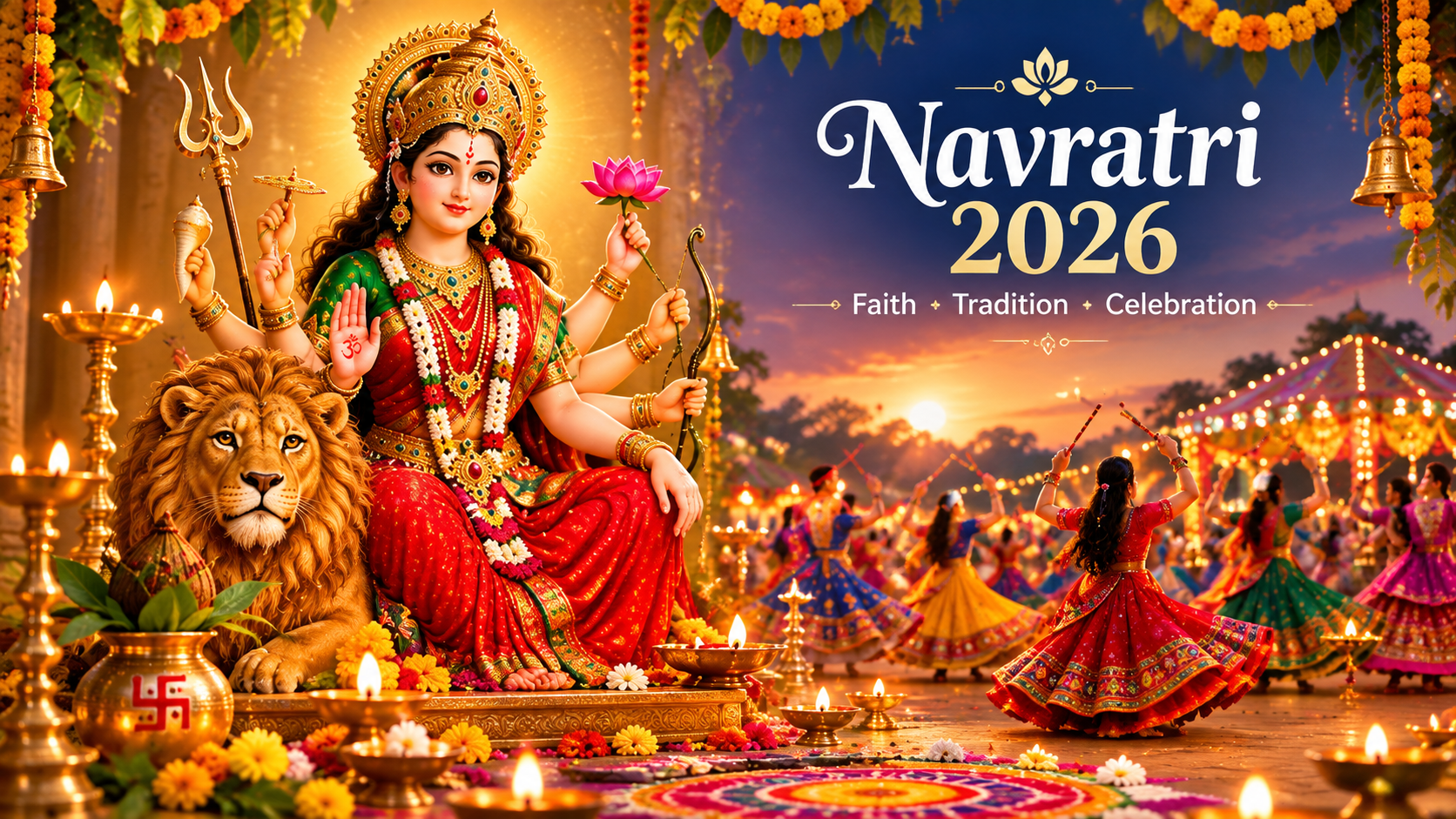
Navratri is one of the most vibrant and spiritually significant festivals celebrated across India. The word Navratri literally means “nine nights,” and the festival is dedicated to the worship of Goddess Durga and the divine feminine power, or Shakti. During these nine nights and ten days, devotees pray, fast, visit temples, perform puja, participate in Garba and Dandiya, and celebrate the victory of good over evil.
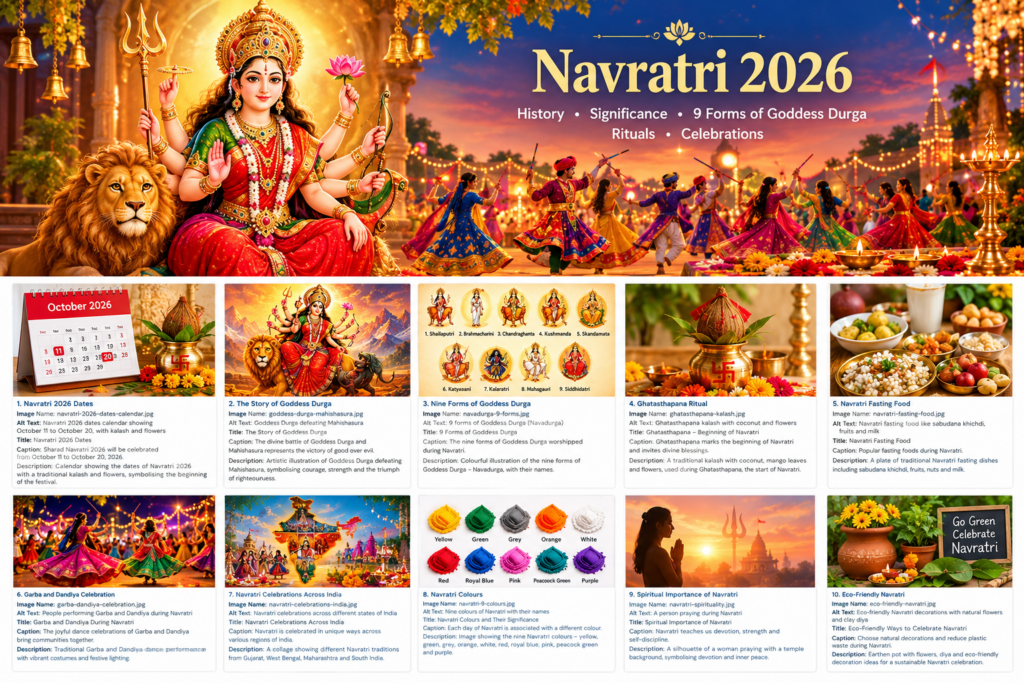
In 2026, Sharad Navratri begins on Sunday, October 11, and concludes with Vijayadashami on Tuesday, October 20. The exact rituals, colours, fasting traditions and celebrations can vary by region and family tradition.
From the powerful story of Goddess Durga and Mahishasura to the nine forms of Maa Durga, Navratri brings together mythology, devotion, music, dance and community celebrations.
When Is Navratri 2026?
Sharad Navratri 2026 will be observed from October 11 to October 20, 2026 in Maharashtra and across much of India. The first day is associated with Ghatasthapana and the worship of Maa Shailaputri, while the festival culminates in Vijayadashami, also known as Dussehra.
The nine principal days are dedicated to the nine forms of Goddess Durga, collectively known as Navadurga.
What Is Navratri and Why Is It Celebrated?
Navratri is a festival devoted to Shakti, the divine feminine energy. One of the best-known traditions connects the festival with the battle between Goddess Durga and the demon Mahishasura.
According to Hindu tradition, Mahishasura had become extremely powerful and threatened the gods and the world. The divine powers came together to create Goddess Durga, who fought Mahishasura and ultimately defeated him.
The story represents the victory of good over evil, righteousness over arrogance and divine strength over destructive forces. This spiritual message is one of the central ideas behind Navratri celebrations.
Navratri is also understood as a period for devotion, self-discipline, reflection and seeking the blessings of the Goddess.
The 9 Forms of Goddess Durga During Navratri
Each of the nine days of Navratri is traditionally associated with a particular form of Goddess Durga. These forms are collectively called Navadurga.
- Maa Shailaputri
Maa Shailaputri is worshipped on the first day of Navratri. Her name means “daughter of the mountain.” She is traditionally depicted riding a bull and carrying a trident and lotus.
Her worship represents strength, purity and a new beginning.
- Maa Brahmacharini
The second day is dedicated to Maa Brahmacharini. She represents devotion, determination, patience and spiritual discipline.
Devotees worship her while seeking inner strength and the ability to remain focused on their spiritual path.
- Maa Chandraghanta
Maa Chandraghanta is worshipped on the third day. She is associated with courage, peace and protection.
Her name comes from the crescent moon shaped like a bell that adorns her forehead. She represents the power to face difficulties with confidence.
- Maa Kushmanda
The fourth day is dedicated to Maa Kushmanda. She is traditionally associated with cosmic energy and creation.
Her name and mythology are connected with the idea of creating and sustaining the universe through divine energy.
- Maa Skandamata
Maa Skandamata is worshipped on the fifth day. She is depicted holding her son, Lord Kartikeya, and represents motherhood, compassion and protection.
Devotees seek her blessings for peace, family well-being and maternal grace.
- Maa Katyayani
The sixth day is dedicated to Maa Katyayani, a powerful form of Goddess Durga.
She represents courage, strength and the ability to overcome obstacles. Her worship is particularly associated with divine feminine power.
- Maa Kalaratri
Maa Kalaratri is worshipped on the seventh day. Although her appearance is fierce, she is regarded as a protective form of the Goddess.
She represents the destruction of darkness, fear and negative forces.
- Maa Mahagauri
The eighth day is dedicated to Maa Mahagauri. She is associated with purity, peace, compassion and spiritual cleansing.
Many devotees observe special prayers and ceremonies on this day, which is also associated with Durga Ashtami in many traditions.
- Maa Siddhidatri
Maa Siddhidatri is worshipped on the ninth day. She is traditionally associated with spiritual wisdom, accomplishment and divine blessings.
Her worship marks the completion of the nine-day devotion to the Navadurga.
The nine forms of Goddess Durga represent different expressions of Shakti, including courage, devotion, wisdom, compassion, protection and spiritual strength.
Navratri 2026: Day-by-Day Celebration
Here is a simple overview of the 2026 Sharad Navratri schedule:
Date | Day | Main Goddess / Observance |
October 11, 2026 | Sunday | Ghatasthapana, Maa Shailaputri |
October 12, 2026 | Monday | Maa Brahmacharini |
October 13, 2026 | Tuesday | Maa Chandraghanta |
October 14, 2026 | Wednesday | Maa Kushmanda |
October 15, 2026 | Thursday | Maa Skandamata |
October 16, 2026 | Friday | Maa Katyayani |
October 17, 2026 | Saturday | Maa Kalaratri |
October 18, 2026 | Sunday | Navratri observance |
October 19, 2026 | Monday | Durga Ashtami, Maa Mahagauri |
October 20, 2026 | Tuesday | Vijayadashami / Dussehra |
The precise observances can differ according to regional panchang traditions.
Ghatasthapana: Beginning of Navratri
Ghatasthapana marks the beginning of many Navratri celebrations. A sacred kalash is established as part of the puja, symbolising auspiciousness and the presence of divine energy.
Devotees clean and decorate their prayer spaces, light lamps and begin nine days of worship. Families may also establish an image or idol of Goddess Durga and perform daily prayers.
The exact Ghatasthapana muhurat depends on the location and local panchang, so devotees should check a reliable local calendar before performing the ritual.
Navratri Fasting and Food Traditions
Fasting is an important part of Navratri for many devotees, although practices differ from one household and region to another.
Some people observe a complete fast, while others eat specific foods permitted during fasting. Commonly used ingredients can include fruits, milk, nuts, potatoes, sabudana and certain types of fasting flour.
Popular Navratri foods include:
- Sabudana khichdi
- Sabudana vada
- Singhara or water-chestnut flour preparations
- Kuttu dishes
- Roasted makhana
- Fruits
- Dry fruits
- Milk-based dishes
Fasting is traditionally viewed as a way to practice discipline and focus on devotion. People should follow fasting practices appropriate to their health and personal circumstances.
Garba and Dandiya: The Joyful Side of Navratri
Navratri is not only a festival of prayers and fasting. It is also a major cultural celebration.
Garba and Dandiya are especially associated with Navratri celebrations in Gujarat. People dress in colourful traditional clothing and gather in large groups to dance to devotional and festive music.
Garba is commonly performed in a circular formation, creating a sense of community and togetherness. Dandiya involves decorated sticks and coordinated dance movements.
Today, Navratri dance events are popular far beyond Gujarat, with cities across India and abroad organising large Garba and Dandiya celebrations.
Navratri Celebrations Across India
One of the most fascinating aspects of Navratri is the way different regions celebrate the festival.
Gujarat
Gujarat is famous for energetic Garba and Dandiya celebrations. Large community events bring thousands of people together for music, dance and devotion.
West Bengal
In West Bengal, the period is closely associated with Durga Puja, featuring beautifully decorated pandals, elaborate idols, cultural programmes and devotional ceremonies.
Maharashtra
In Maharashtra, Navratri is celebrated through Goddess worship, temple visits, cultural programmes and community events. Traditional celebrations also include different forms of devotional worship and festive gatherings.
North India
Several parts of North India connect Navratri with fasting, prayers and Ramlila performances, leading toward Dussehra and the celebration of Lord Rama’s victory over Ravana.
South India
In parts of South India, Navratri traditions include Golu or Kolu, where dolls and figurines are arranged in decorative displays.
These different traditions show how one festival can have many cultural expressions while retaining its central themes of devotion and the triumph of good over evil.
Navratri Colours and Their Significance
Wearing a different colour on each day of Navratri has become a popular tradition, particularly in Maharashtra and Gujarat.
For 2026, one Maharashtra Tourism listing gives the following colours:
- Day 1 – Yellow
- Day 2 – Green
- Day 3 – Grey
- Day 4 – Orange
- Day 5 – White
- Day 6 – Red
- Day 7 – Royal Blue
- Day 8 – Pink or Peacock Green
- Day 9 – Purple or Violet
However, Navratri colour traditions can vary by calendar, region and year, so it is better to verify the colours with the local panchang or community tradition you are following.
Why Is Navratri Spiritually Important?
Navratri encourages devotees to look beyond the colourful celebrations and connect with deeper spiritual values.
The festival reminds people about:
- The importance of courage
- The power of devotion
- The victory of good over evil
- The strength of feminine energy
- The value of self-discipline
- The importance of compassion
- The need to overcome fear and negativity
The nine forms of Goddess Durga can also be viewed as symbolic reminders of qualities that people can cultivate in their everyday lives.
Eco-Friendly Ways to Celebrate Navratri
As Navratri celebrations become larger, choosing environmentally responsible practices can make the festival more sustainable.
Here are some simple ideas:
Choose Natural Decorations
Use flowers, leaves, cloth, paper and reusable decorations instead of excessive plastic.
Avoid Single-Use Plastic
Community events and home celebrations can reduce plastic cups, plates, bags and decorative materials.
Use Energy-Efficient Lighting
LED lights and energy-efficient decorative lighting can help reduce unnecessary electricity consumption.
Reduce Food Waste
Prepare food according to the number of people attending and distribute extra food responsibly.
Keep Celebrations Respectful
Music, dance and community events can be enjoyed while also respecting local noise and public-space regulations.
Reuse Decorations
Store decorative items carefully and use them again for future festivals rather than throwing them away after one celebration.
An eco-friendly Navratri can be just as beautiful while creating less waste.
Navratri and the Message of Shakti
At its heart, Navratri celebrates Shakti—the divine feminine power.
The Goddess is worshipped in different forms, from the gentle and compassionate to the fierce and protective. This reminds devotees that strength can take many forms.
The festival also highlights the importance of courage, wisdom, compassion and determination. Whether someone celebrates through fasting and prayer, visiting a temple, participating in Garba, attending Durga Puja or simply spending time with family, Navratri offers an opportunity to reconnect with tradition and spirituality.
Frequently Asked Questions About Navratri
When is Navratri 2026?
Sharad Navratri 2026 begins on October 11, 2026, and the festival culminates with Vijayadashami on October 20, 2026.
What are the nine forms of Goddess Durga?
The nine forms are Maa Shailaputri, Maa Brahmacharini, Maa Chandraghanta, Maa Kushmanda, Maa Skandamata, Maa Katyayani, Maa Kalaratri, Maa Mahagauri and Maa Siddhidatri.
Why do people fast during Navratri?
Many devotees fast as an expression of devotion and self-discipline. Fasting practices vary considerably between families and regions.
Why is Garba performed during Navratri?
Garba is a traditional devotional and cultural dance strongly associated with Navratri, particularly in Gujarat. Today it is celebrated widely in India and around the world.
Is Navratri the same as Durga Puja?
They overlap in the broader period and both honour Goddess Durga, but regional traditions differ. Durga Puja is especially prominent in eastern India, while Navratri encompasses many different traditions across India.
What is celebrated after Navratri?
The festival period culminates in Vijayadashami or Dussehra, which celebrates the victory of good over evil in several major Indian traditions.
Conclusion
Navratri is much more than nine nights of celebration. It is a festival of faith, strength, devotion, culture and community.
From the worship of the nine forms of Goddess Durga and the observance of fasts to the vibrant rhythms of Garba and Dandiya, Navratri brings together India’s diverse traditions in a remarkable celebration of Shakti.
In 2026, as families and communities prepare to welcome the festival from October 11 onward, Navratri once again offers a beautiful opportunity to celebrate tradition while embracing values of courage, compassion, discipline and positivity.
Jai Mata Di!
🌺 108 Names of Maa Durga
- ॐ श्रियै नमः — Om Shriyai Namah
- ॐ उमायै नमः — Om Umayai Namah
- ॐ भारत्यै नमः — Om Bharatyai Namah
- ॐ भद्रायै नमः — Om Bhadrayai Namah
- ॐ शर्वाण्यै नमः — Om Sharvanyai Namah
- ॐ विजयायै नमः — Om Vijayayai Namah
- ॐ जयायै नमः — Om Jayayai Namah
- ॐ वाण्यै नमः — Om Vanyai Namah
- ॐ सर्वगतायै नमः — Om Sarvagatayai Namah
- ॐ गौर्यै नमः — Om Gauryai Namah
- ॐ वाराह्यै नमः — Om Varahyai Namah
- ॐ कमलप्रियायै नमः — Om Kamalapriyayai Namah
- ॐ सरस्वत्यै नमः — Om Sarasvatyai Namah
- ॐ कमलायै नमः — Om Kamalayai Namah
- ॐ मायायै नमः — Om Mayayai Namah
- ॐ मातंग्यै नमः — Om Matamgyai Namah
- ॐ अपरायै नमः — Om Aparayai Namah
- ॐ अजायै नमः — Om Ajayai Namah
- ॐ शांकभर्यै नमः — Om Shamkabharyai Namah
- ॐ शिवायै नमः — Om Shivayai Namah
- ॐ चण्डायै नमः — Om Chandayai Namah
- ॐ कुण्डल्यै नमः — Om Kundalyai Namah
- ॐ वैष्णव्यै नमः — Om Vaishnavyai Namah
- ॐ क्रियायै नमः — Om Kriyayai Namah
- ॐ श्रियै नमः — Om Shriyai Namah
- ॐ ऐन्द्रयै नमः — Om Aindrayai Namah
- ॐ मधुमत्यै नमः — Om Madhumatyai Namah
- ॐ गिरिजायै नमः — Om Girijayai Namah
- ॐ सुभगायै नमः — Om Subhagayai Namah
- ॐ अम्बिकायै नमः — Om Ambikayai Namah
- ॐ तारायै नमः — Om Tarayai Namah
- ॐ पद्मावत्यै नमः — Om Padmavatyai Namah
- ॐ हंसायै नमः — Om Hamsayai Namah
- ॐ पद्मनाभसहोदर्यै नमः — Om Padmanabhasahodaryai Namah
- ॐ अपर्णायै नमः — Om Aparnayai Namah
- ॐ ललितायै नमः — Om Lalitayai Namah
- ॐ धात्र्यै नमः — Om Dhatryai Namah
- ॐ कुमार्यै नमः — Om Kumaryai Namah
- ॐ शिखवाहिन्यै नमः — Om Shikhavahinyai Namah
- ॐ शाम्भव्यै नमः — Om Shambhavyai Namah
- ॐ सुमुख्यै नमः — Om Sumukhyai Namah
- ॐ मैत्र्यै नमः — Om Maitryai Namah
- ॐ त्रिनेत्रायै नमः — Om Trinetrayai Namah
- ॐ विश्वरूपिण्यै नमः — Om Vishvarupinyai Namah
- ॐ आर्यायै नमः — Om Aryayai Namah
- ॐ मृडान्यै नमः — Om Mridanyai Namah
- ॐ हींकार्यै नमः — Om Himkaryai Namah
- ॐ क्रोधिन्यै नमः — Om Krodhinyai Namah
- ॐ सुदिनायै नमः — Om Sudinayai Namah
- ॐ अचलायै नमः — Om Achalayai Namah
- ॐ सूक्ष्मायै नमः — Om Sukshmayai Namah
- ॐ परात्परायै नमः — Om Paratparayai Namah
- ॐ शोभायै नमः — Om Shobhayai Namah
- ॐ सर्ववर्णायै नमः — Om Sarvavarnayai Namah
- ॐ हरप्रियायै नमः — Om Harapriyayai Namah
- ॐ महालक्ष्म्यै नमः — Om Mahalakshmyai Namah
- ॐ महासिद्धयै नमः — Om Mahasiddhayai Namah
- ॐ स्वधायै नमः — Om Svadhayai Namah
- ॐ स्वाहायै नमः — Om Svahayai Namah
- ॐ मनोन्मन्यै नमः — Om Manonmanyai Namah
- ॐ त्रिलोकपालिन्यै नमः — Om Trilokapalinyai Namah
- ॐ उद्भूतायै नमः — Om Udbhutayai Namah
- ॐ त्रिसन्ध्यायै नमः — Om Trisandhyayai Namah
- ॐ त्रिपुरान्तक्यै नमः — Om Tripurantakyai Namah
- ॐ त्रिशक्त्यै नमः — Om Trishaktyai Namah
- ॐ त्रिपदायै नमः — Om Tripadayai Namah
- ॐ दुर्गायै नमः — Om Durgayai Namah
- ॐ ब्राह्म्यै नमः — Om Brahmayai Namah
- ॐ त्रैलोक्यवासिन्यै नमः — Om Trailokyavasinyai Namah
- ॐ पुष्करायै नमः — Om Pushkarayai Namah
- ॐ अत्रिसुतायै नमः — Om Atrisutayai Namah
- ॐ गूढायै नमः — Om Gudhayai Namah
- ॐ त्रिवर्णायै नमः — Om Trivarnayai Namah
- ॐ त्रिस्वरायै नमः — Om Trisvarayai Namah
- ॐ त्रिगुणायै नमः — Om Trigunayai Namah
- ॐ निर्गुणायै नमः — Om Nirgunayai Namah
- ॐ सत्यायै नमः — Om Satyayai Namah
- ॐ निर्विकल्पायै नमः — Om Nirvikalpayai Namah
- ॐ निरंजिन्यै नमः — Om Niramjinyai Namah
- ॐ ज्वालिन्यै नमः — Om Jvalinyai Namah
- ॐ मालिन्यै नमः — Om Malinyai Namah
- ॐ चर्चायै नमः — Om Charchayai Namah
- ॐ क्रव्यादोप निबर्हिण्यै नमः — Om Kravyadopa Nibarhinyai Namah
- ॐ कामाक्ष्यै नमः — Om Kamakshyai Namah
- ॐ कामिन्यै नमः — Om Kaminyai Namah
- ॐ कान्तायै नमः — Om Kantayai Namah
- ॐ कामदायै नमः — Om Kamadayai Namah
- ॐ कलहंसिन्यै नमः — Om Kalahamsinyai Namah
- ॐ सलज्जायै नमः — Om Salajjayai Namah
- ॐ कुलजायै नमः — Om Kulajayai Namah
- ॐ प्राज्ञ्यै नमः — Om Prajnyai Namah
- ॐ प्रभायै नमः — Om Prabhayai Namah
- ॐ मदनसुन्दर्यै नमः — Om Madanasundaryai Namah
- ॐ वागीश्वर्यै नमः — Om Vagishvaryai Namah
- ॐ विशालाक्ष्यै नमः — Om Vishalakshyai Namah
- ॐ सुमंगल्यै नमः — Om Sumamgalyai Namah
- ॐ काल्यै नमः — Om Kalyai Namah
- ॐ महेश्वर्यै नमः — Om Maheshvaryai Namah
- ॐ चण्ड्यै नमः — Om Chandyai Namah
- ॐ भैरव्यै नमः — Om Bhairavyai Namah
- ॐ भुवनेश्वर्यै नमः — Om Bhuvaneshvaryai Namah
- ॐ नित्यायै नमः — Om Nityayai Namah
- ॐ सानन्दविभवायै नमः — Om Sanandavibhavayai Namah
- ॐ सत्यज्ञानायै नमः — Om Satyajnanayai Namah
- ॐ तमोपहायै नमः — Om Tamopahayai Namah
- ॐ महेश्वरप्रियंकर्यै नमः — Om Maheshvarapriyamkaryai Namah
- ॐ महात्रिपुरसुन्दर्यै नमः — Om Mahatripurasundaryai Namah
- ॐ दुर्गापरमेश्वर्यै नमः — Om Durgaparameshvaryai Namah